
Agentic PLG
Designing an end-to-end product-led growth experience powered by an AI SDR agent
Time
NOV 2025
Role
Lead web designer
Contributions
• Narrative & information architecture
• UX/UI design for landing experience
• Product storytelling & flow mapping
• Visual system & interaction patterns
Deliverable
• Landing page experience
• Product storytelling modules
• Conversion-focused user flows
• Supporting campaign assets
Overview
This project explores how AI can transform product-led growth from a fragmented, self-serve experience into a guided, conversion-driven journey.
As companies scale PLG motions, they face a critical gap:
while users engage with products independently, sales teams lack visibility, timing, and the ability to influence conversion.
Working from a product marketing brief, I approached this as an experience design challenge—designing a system that connects product signals, user intent, and real-time engagement through Piper, an AI SDR agent.
The goal was to clearly communicate how Piper can support the entire PLG lifecycle—from trial to conversion—while making a complex, multi-stage system easy to understand and act on.
👀 Challenge
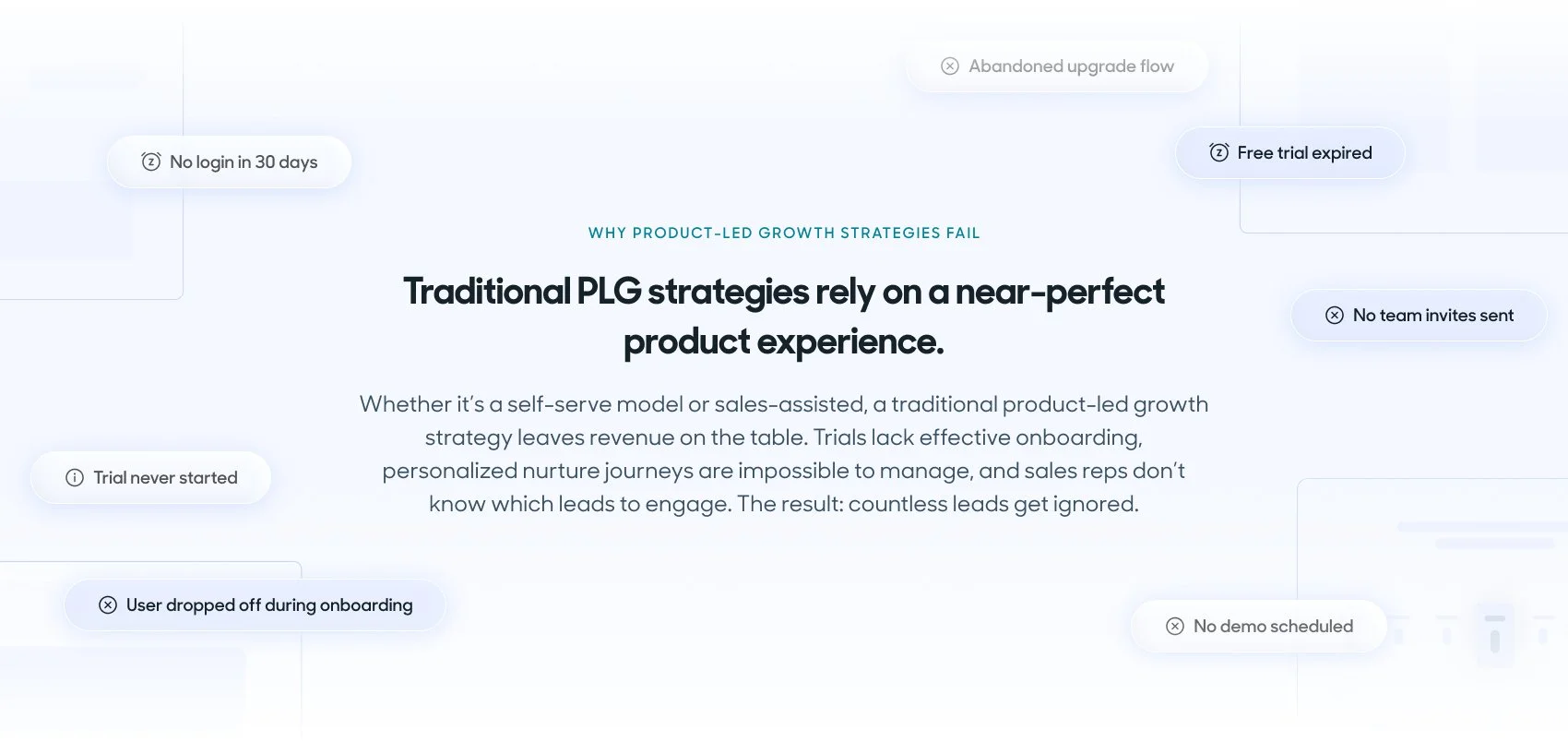
PLG introduces a fundamentally different growth model—but also new challenges:
Product usage signals are disconnected from sales workflows
High volumes of self-serve users make personalization difficult
Conversion from free → paid lacks real-time engagement
Sales teams struggle to prioritize and act on product-qualified leads
The core challenge was not just explaining these problems—but translating a complex system into a clear, actionable experience.
✨ Design Approach
I approached this project as a product storytelling problem, not a traditional marketing page.
Instead of presenting features, I designed a structured narrative that mirrors how users think:
1. Reframing the problem
→ PLG isn’t broken—but conversion is fragmented
2. Mapping the product experience
→ Show how Piper connects trial, engagement, and conversion
3. Visualizing system behavior
→ Translate complex workflows into clear, digestible modules
4. Guiding toward action
→ Reinforce how real-time engagement drives measurable outcomes
This approach allowed the experience to function as both a product explanation and a conversion tool.
Bridging Product and Pipeline
Explain how Piper transforms free trial engagement into revenue
Structuring the PLG Journey
Design a clear, step-by-step system that shows how Piper supports each stage
Making Complex Systems Understandable
Break down product capabilities into modular, scannable components

Driving Conversion Through Real-Time Engagement
Highlight how timing and automation improve trial-to-paid conversion
🎨 Design Highlights
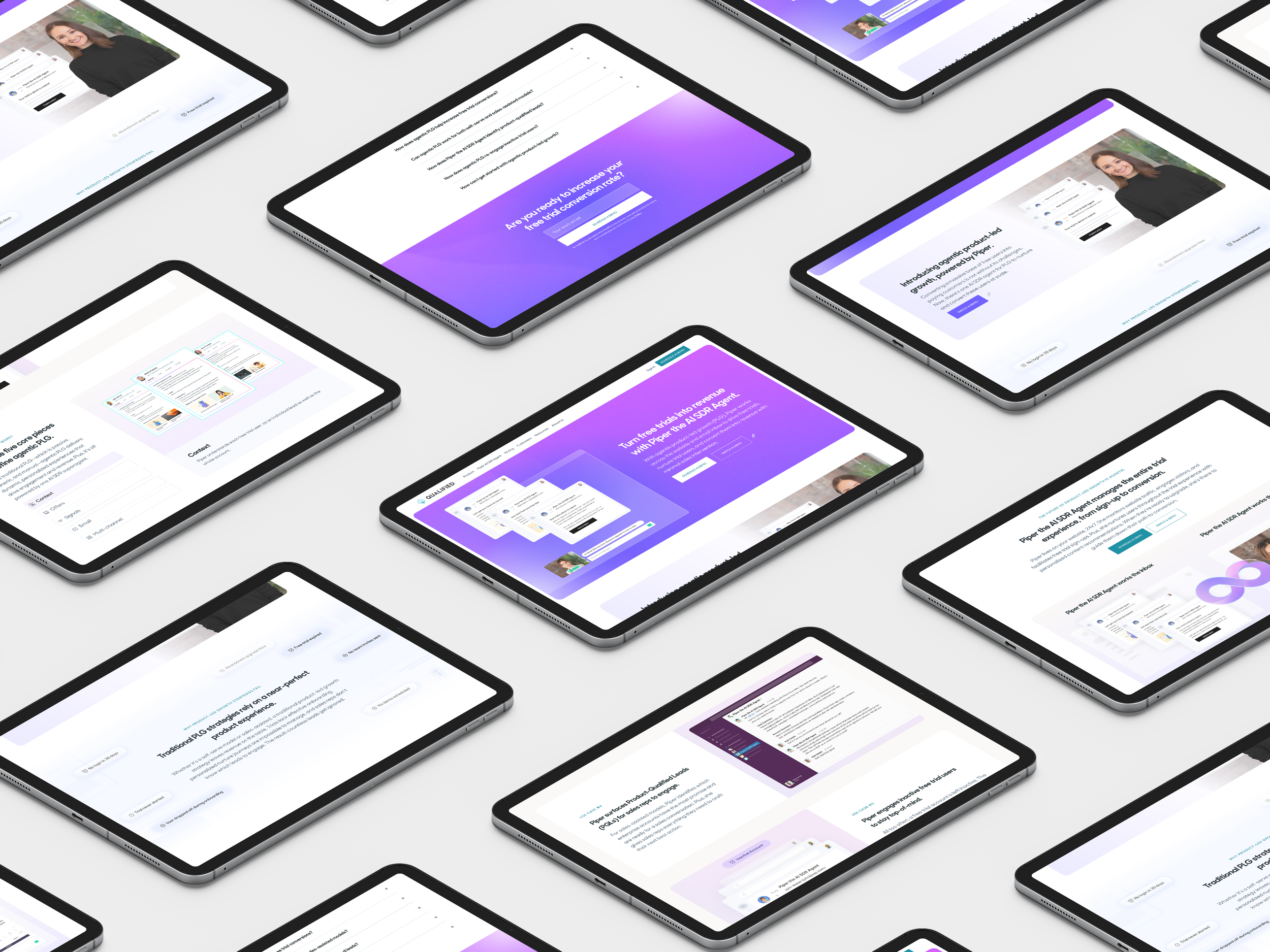
Translated a multi-stage product system into a clear, narrative-driven experience
Designed modular content blocks to support scalability and reuse across campaigns
Balanced product depth with clarity, ensuring both marketers and sales leaders can understand the value
Created a visual system that aligns with the broader Piper ecosystem while maintaining clarity and hierarchy
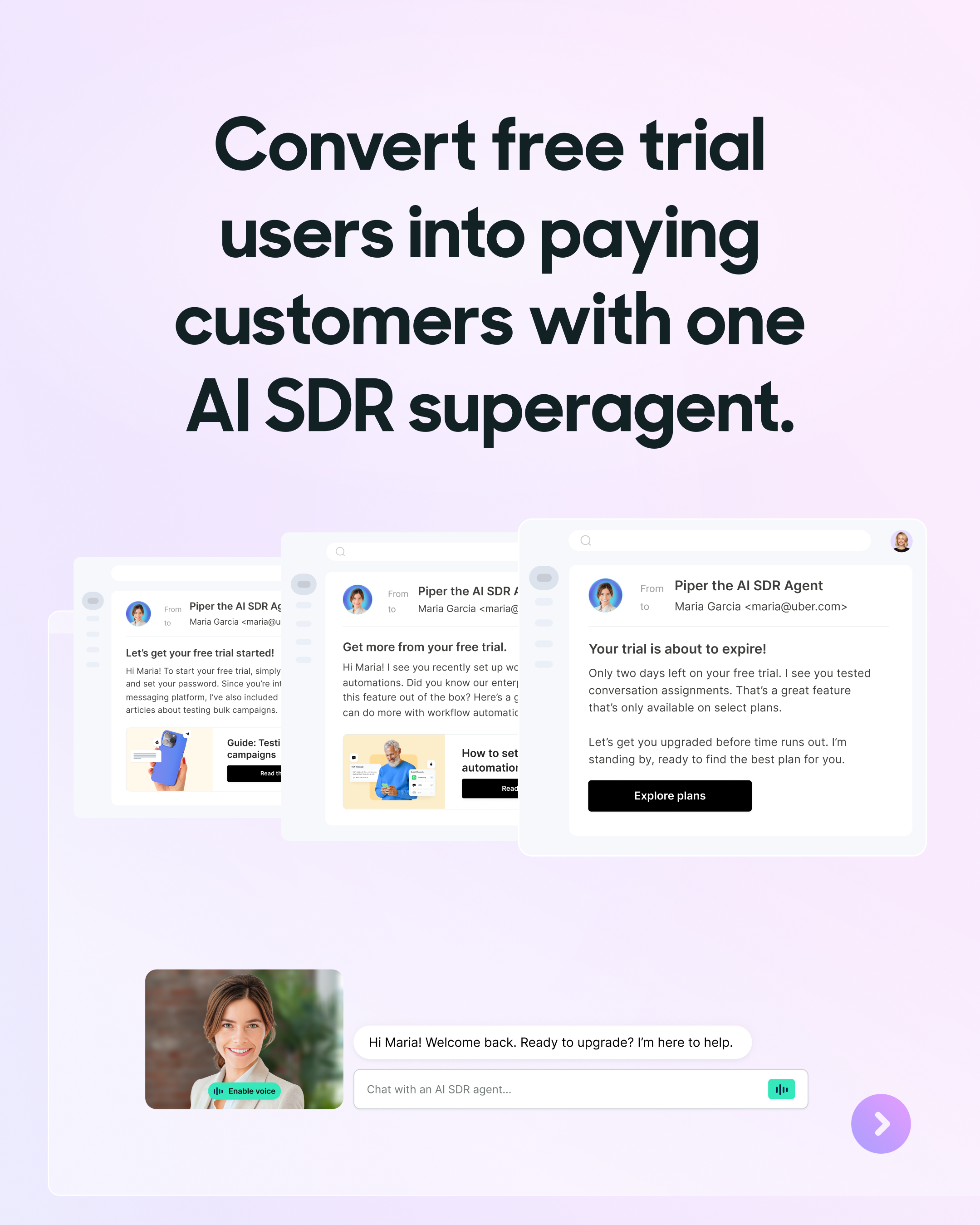
Social Carousel
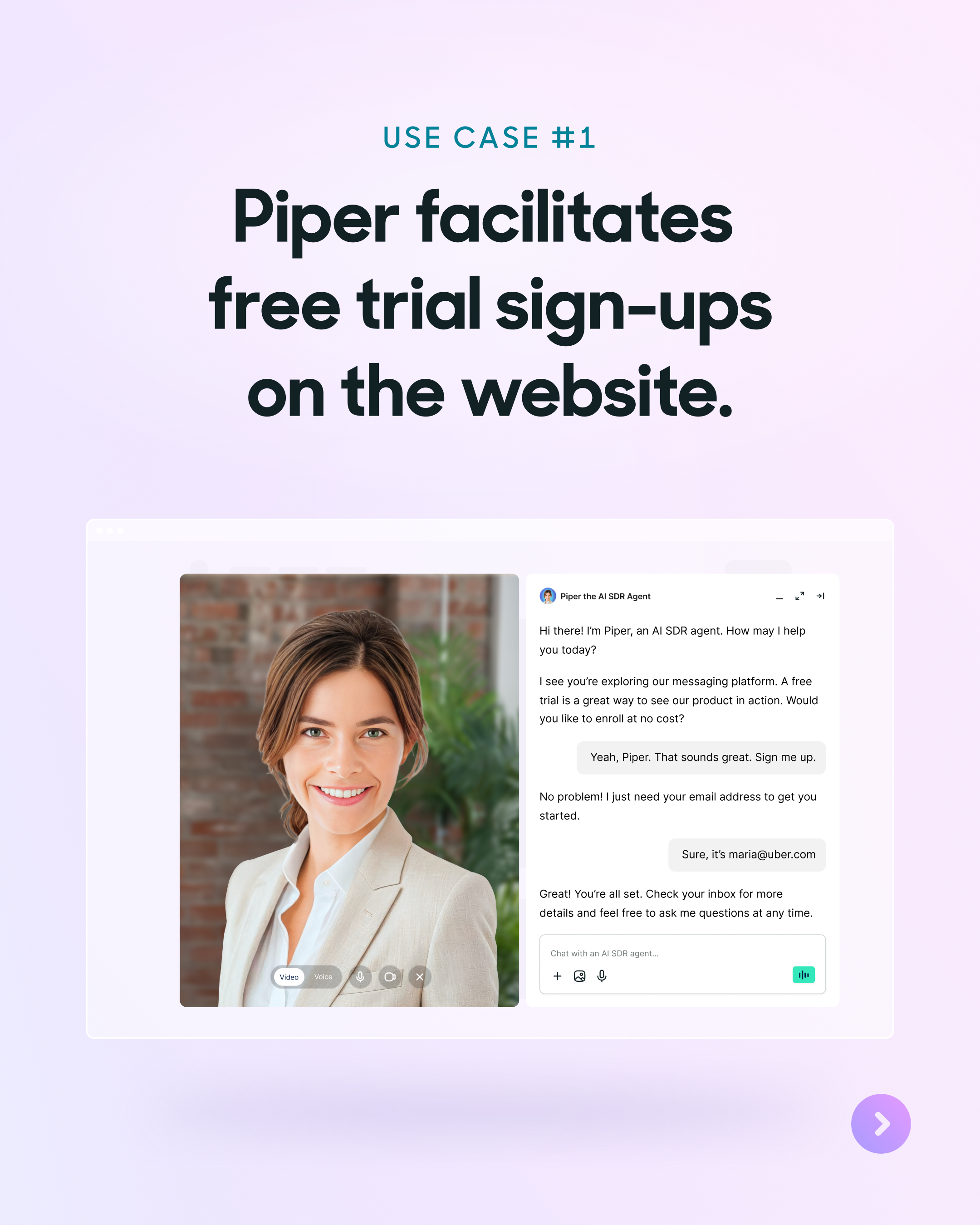
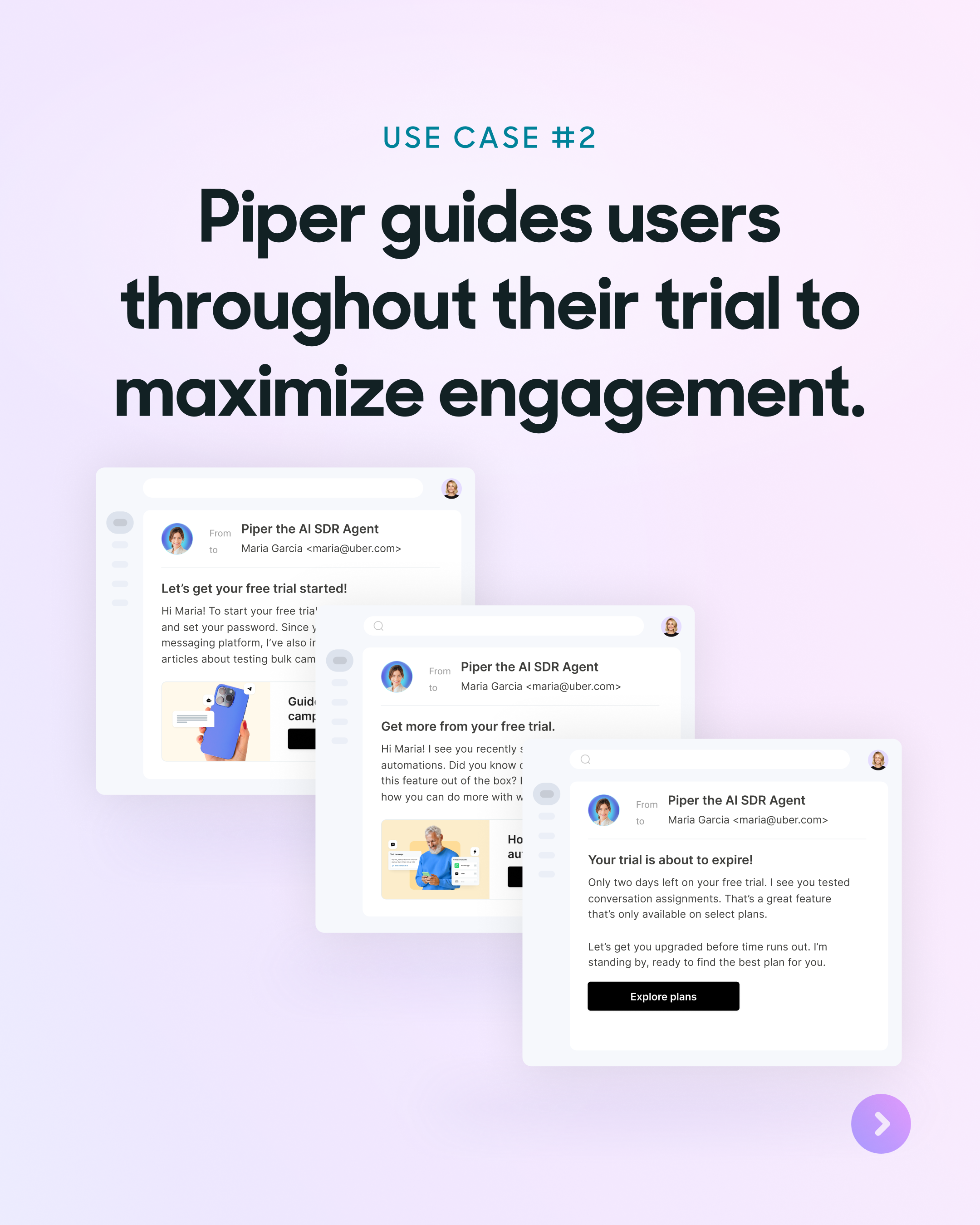
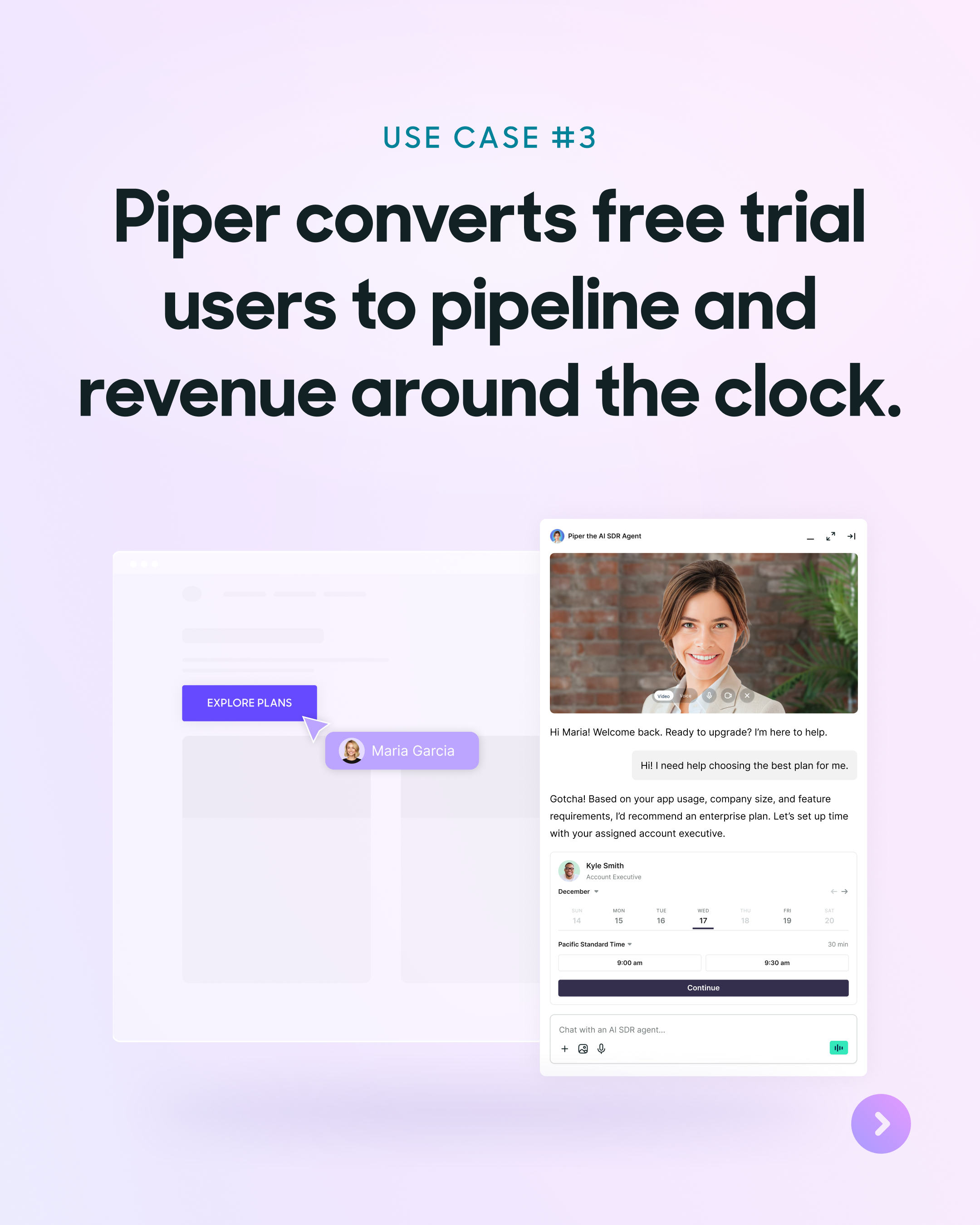
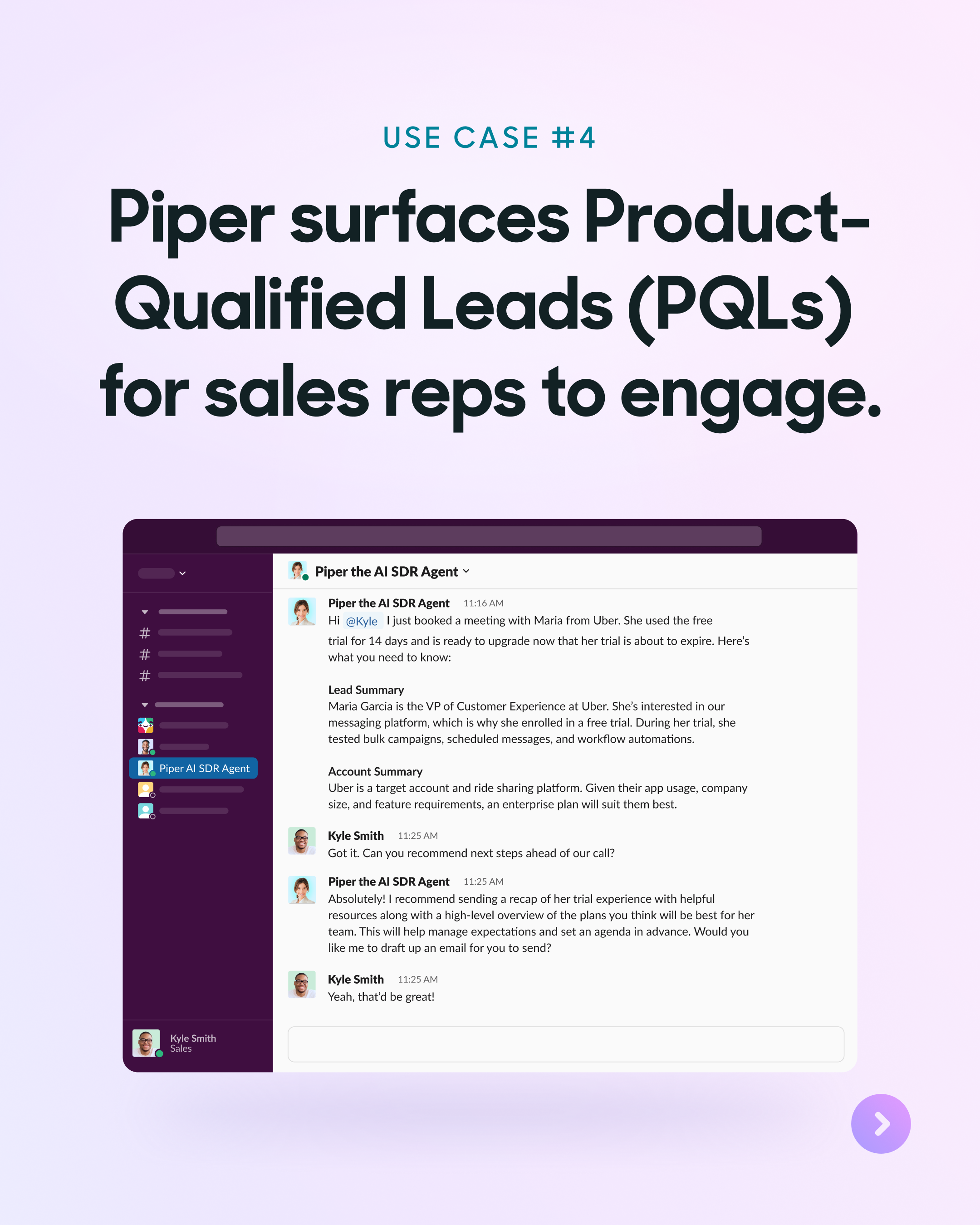
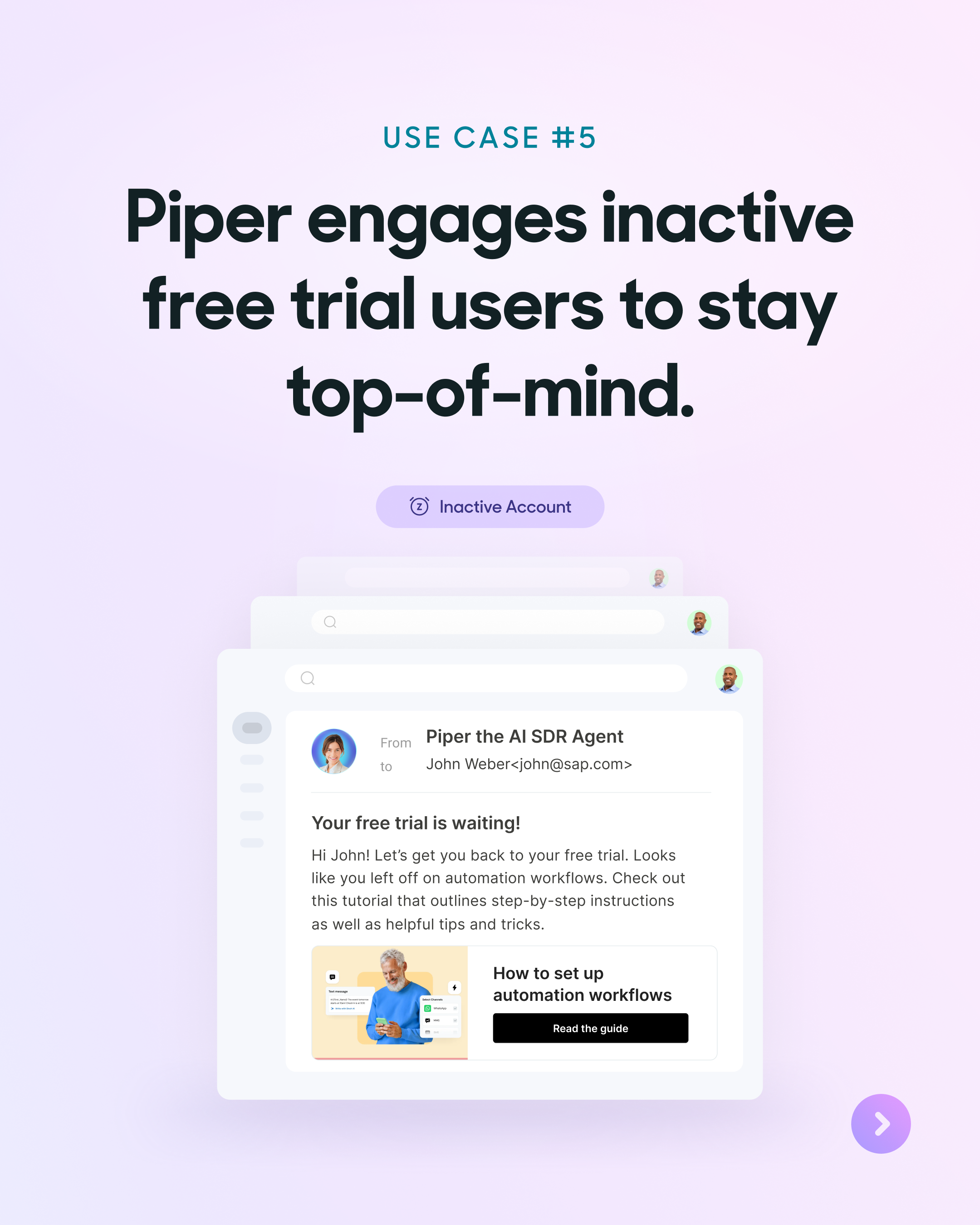
Campaign Email Design
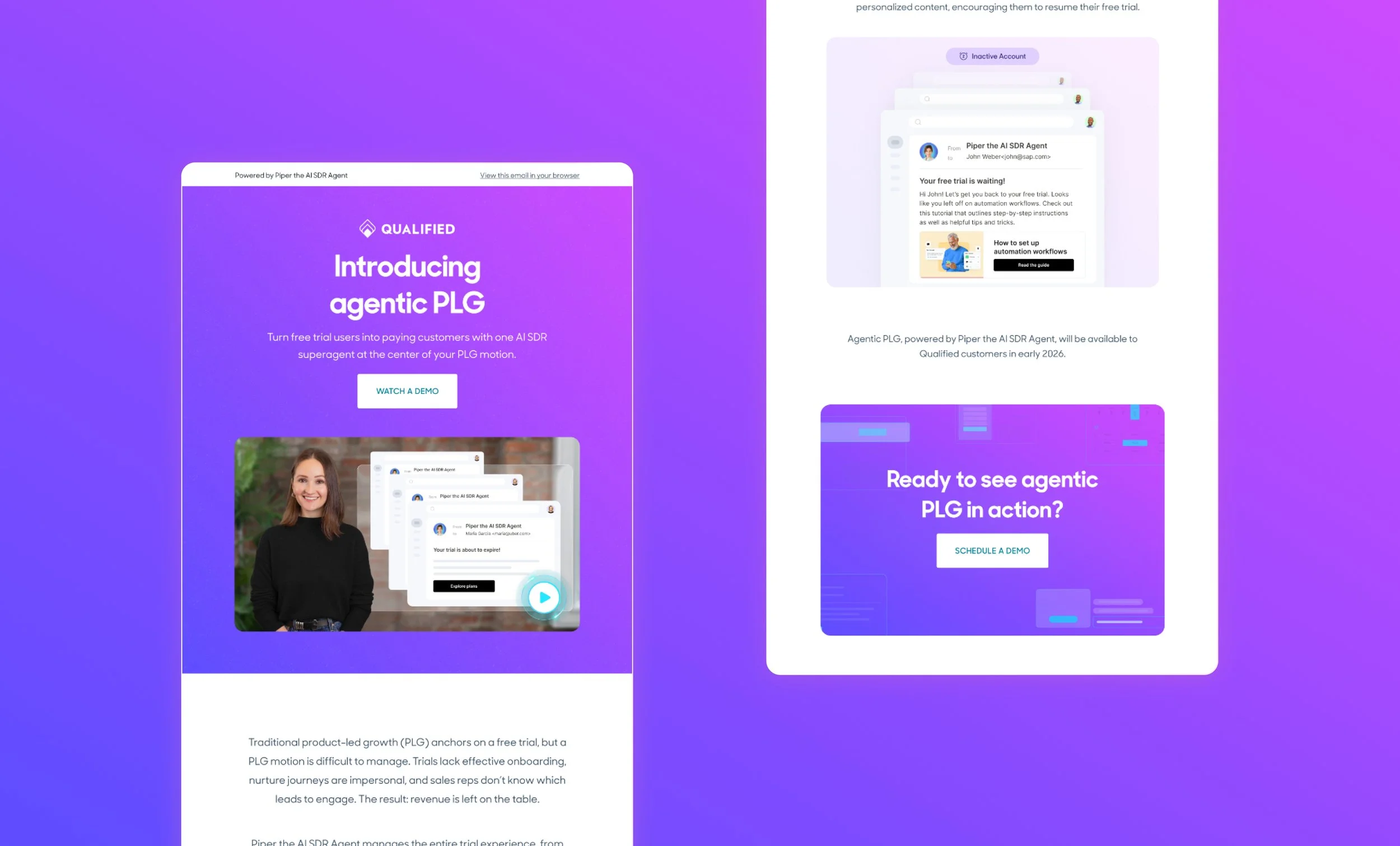
🔗 Extending the Experience Across Channels
To support the full PLG journey, I extended the core experience across multiple channels, ensuring consistent messaging and engagement beyond the landing page.
Email design translated key value propositions into conversion-focused lifecycle touchpoints
Social carousel assets distilled product capabilities into digestible, shareable narratives
Product entry points (e.g. sign-in surfaces) reinforced the connection between product usage and revenue opportunities
Each touchpoint was designed to guide users back into the core experience while maintaining visual and narrative consistency.
🎉 Impact
Enabled clearer positioning of Piper’s PLG capabilities within a competitive market
Supported go-to-market efforts by translating product complexity into a conversion-focused experience
Contributed to a scalable framework for future product storytelling across web and campaigns