
Designing the AI SDR Platform Experience
Helping enterprise users better understand and trust complex AI systems through clearer storytelling and platform communication.
Time
Jan 2026
Role
Lead web designer
Contributions
Led platform experience design and product storytelling
Simplified complex AI workflows into clearer user narratives
Defined information architecture for system-level understanding
Collaborated with PMM on messaging and positioning
Deliverable
End-to-end platform landing page design
High-fidelity responsive layouts
Modular content and layout system
Visual language for AI workflow storytelling
Overview
Piper was an AI SDR platform designed to help enterprise sales teams automate lead engagement and pipeline generation through AI-powered workflows and agent-based interactions.
One of the core design challenges was translating a complex and largely invisible AI system into something users could quickly understand, trust, and navigate. The platform contained dense workflows, multiple AI agents, infrastructure layers, and interconnected systems that could easily feel fragmented or overwhelming.
The project focused on simplifying complexity through clearer visual hierarchy, structured system communication, interaction storytelling, and cohesive platform design.
💪 Challenge
The platform needed to communicate highly technical AI concepts, workflows, and system behaviors in a way that still felt approachable and understandable for enterprise users.
As the platform evolved, the experience risked becoming visually dense and difficult to navigate due to the growing number of AI workflows, capabilities, and connected systems being introduced across the product narrative.
Key challenges included:
Translating invisible AI workflows into understandable user experiences
Building trust in AI-driven system behaviors
Creating clearer relationships between workflows, infrastructure, and platform capabilities
Reducing cognitive overload across dense product narratives
Maintaining visual clarity while communicating technical depth
⭐ Design Approach
I focused on simplifying the platform through clearer hierarchy, layered communication patterns, and more structured visual storytelling.
Rather than exposing raw technical complexity directly, the experience was designed to progressively guide users through the platform by grouping related concepts, simplifying workflows, and reinforcing system relationships through visual structure and interaction design.
Core design principles:
Clear visual hierarchy
Stronger mental models
Improved scannability
Structured workflow storytelling
Cohesive system communication
🎯 Information Architecture
One of the core challenges was helping users understand how different parts of the AI platform connected together.
The final communication model focused on:
Layered information hierarchy
Structural grouping
Progressive disclosure
Clearer relationships between workflows and infrastructure
Faster visual scanning and comprehension
AI Workflows Highlights
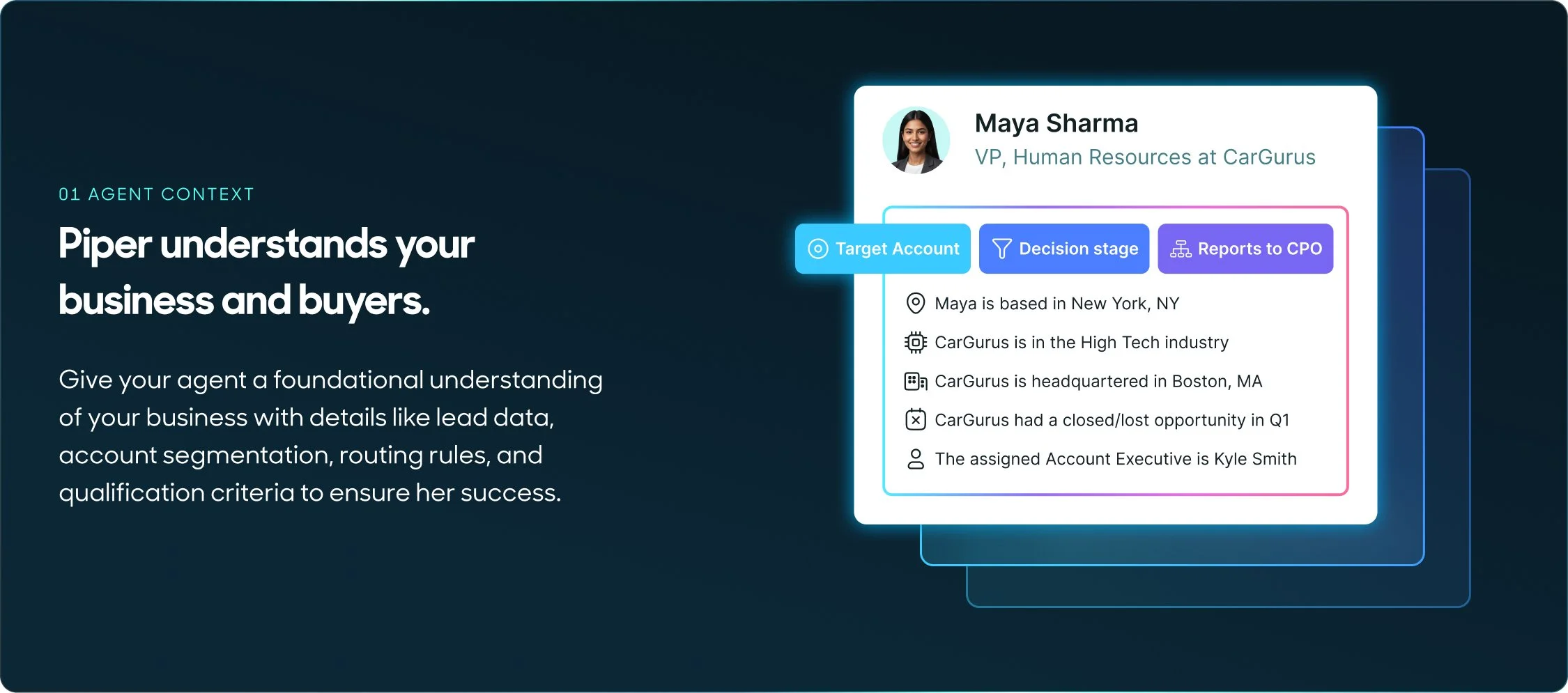
Understanding Context
One challenge was helping users understand how Piper gathered and interpreted buyer context before taking action.
The real product experience contained significantly more operational complexity, so the interaction design focused on simplifying contextual signals into clearer visual patterns that felt easier to scan and understand at a glance.
The experience emphasized:
Context prioritization
Simplified signal grouping
Scannable interaction summaries
Progressive information reveal
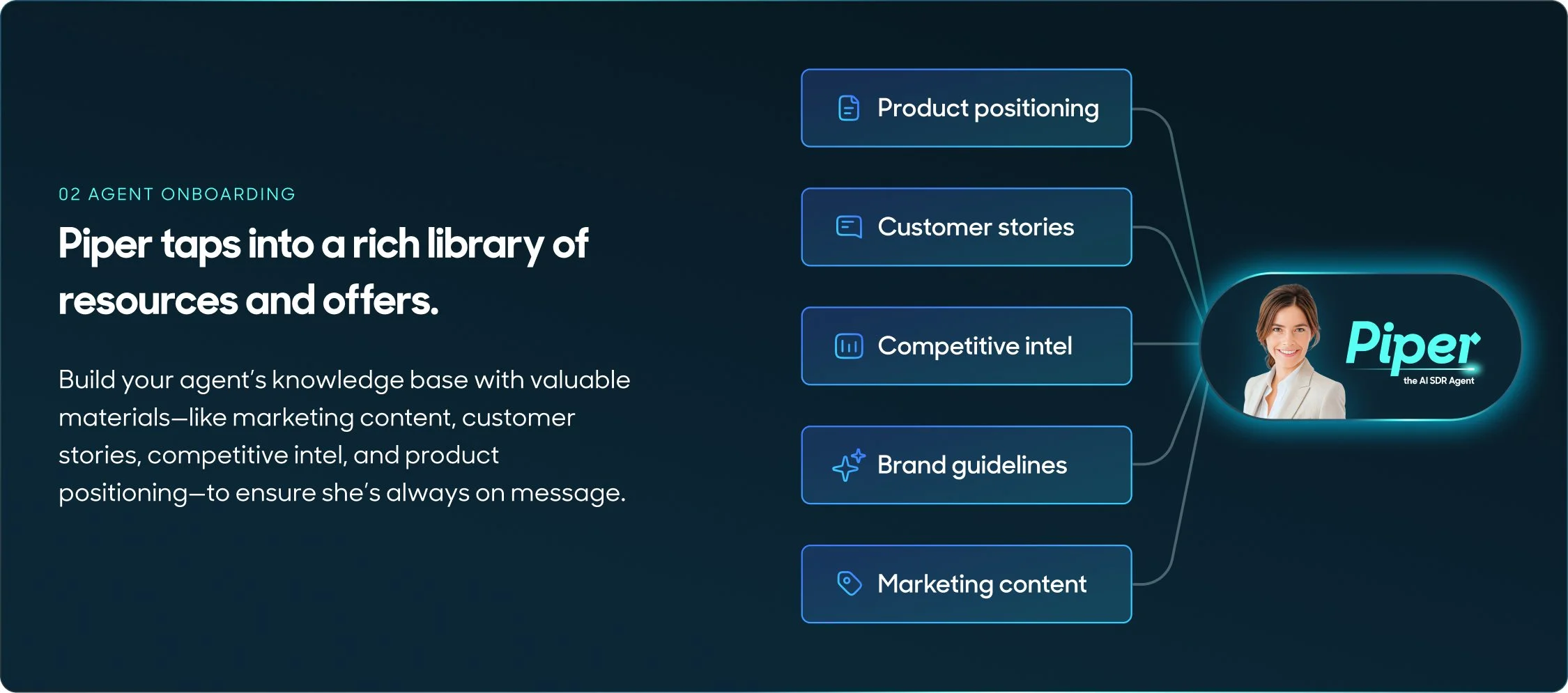
Accessing Knowledge
The platform relied on a large ecosystem of knowledge sources, onboarding flows, and retrieval systems to support AI-driven interactions.
Rather than exposing the full operational complexity, the experience focused on visually simplifying how knowledge sources, guidance systems, and retrieval behaviors were communicated throughout the workflow.
The design focused on:
Structured knowledge grouping
Simplified retrieval visualization
Reduced cognitive load
Clearer workflow progression
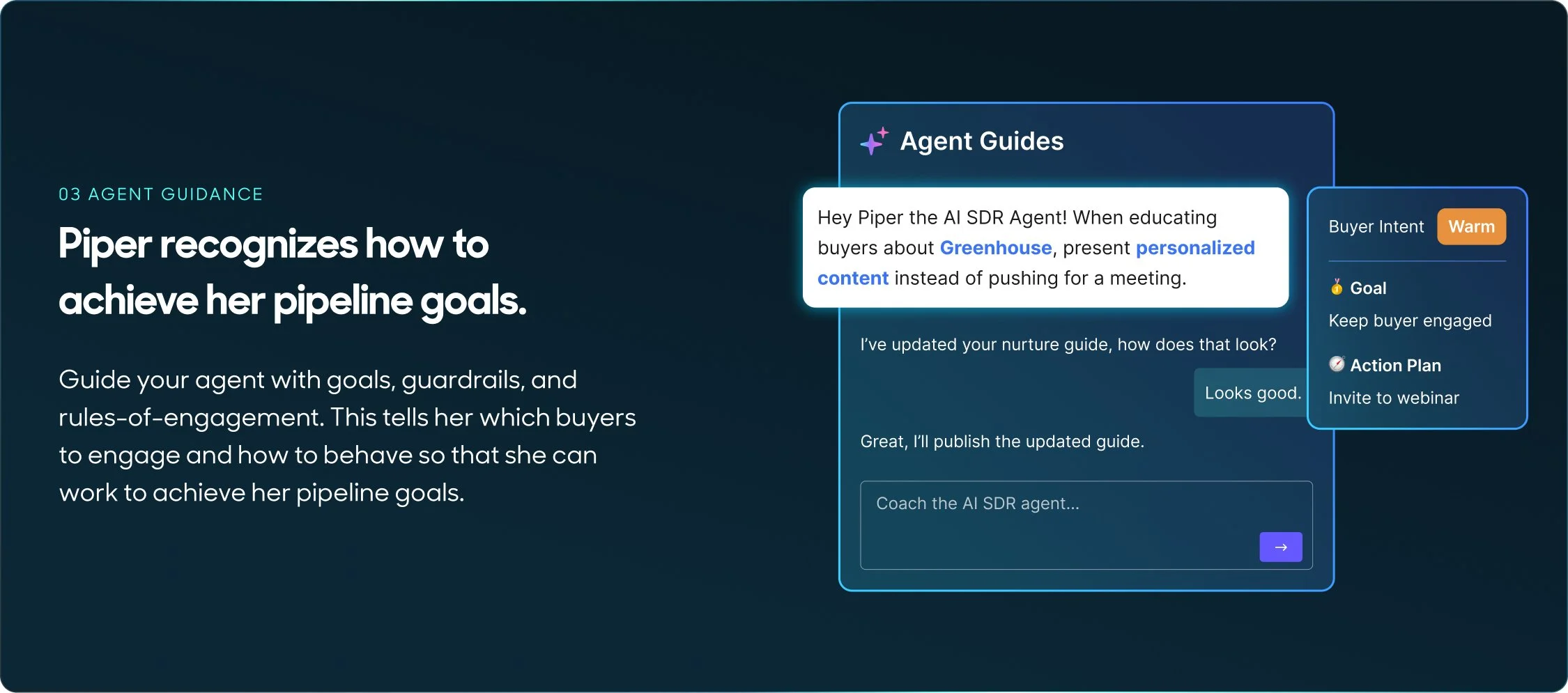
Guiding Decisions
One challenge was helping users understand that Piper wasn’t only acting autonomously — users could also guide how she should behave in different situations.
I simplified this workflow into a coaching-style interaction, where users could give Piper instructions, define preferences, and shape how she responds across buyer conversations.
The experience emphasized:
User-guided AI behavior
Coaching and instruction
Clear action rules
More controllable AI workflows
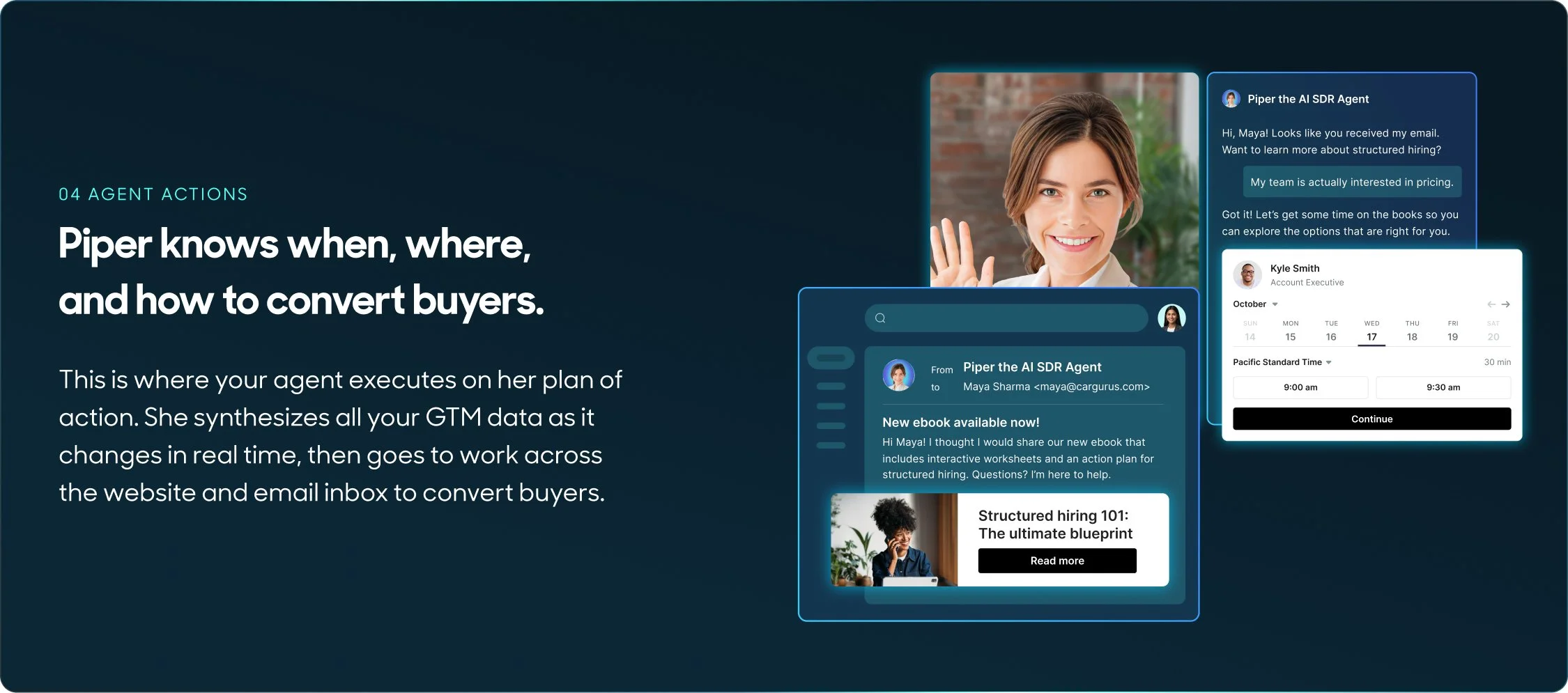
Taking Action
One challenge was showing that Piper was not just an automated outreach tool sending generic messages at scale.
The goal was to communicate that Piper could adapt her engagement based on buyer intent, real-time GTM data, and where the buyer was in the journey.
Visually, I framed this section more like an ecosystem of touchpoints rather than a single task flow. Piper appears to work across different channels and interaction moments, helping users understand that she knows when to engage, where to engage, and how to move the conversation forward.
The experience emphasized:
Context-aware engagement
Multi-channel coordination
Buyer-intent driven actions
More human, relevant interaction moments
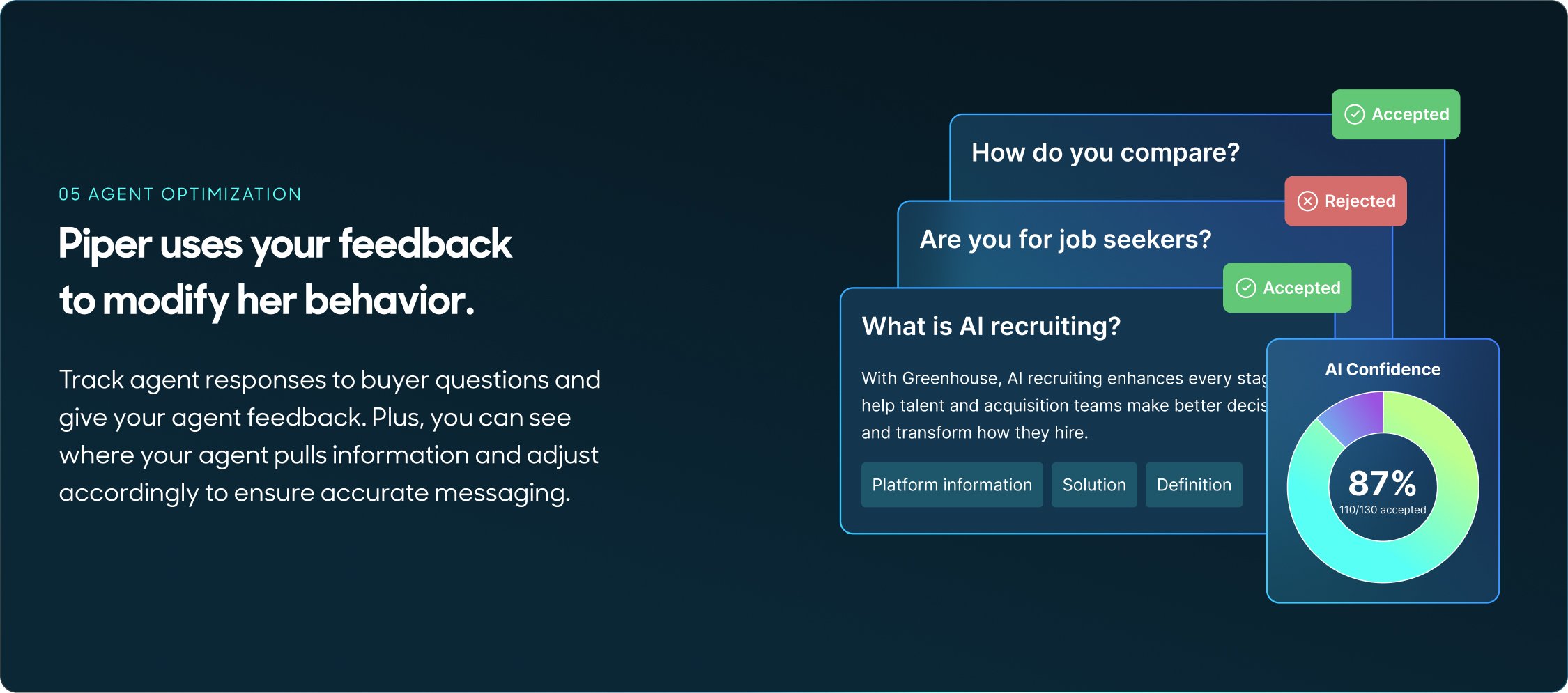
Learning & Optimization
The platform also needed to communicate how the AI system continuously adapted and improved over time.
Visual patterns and feedback systems were designed to reinforce the idea of ongoing optimization without overwhelming users with operational complexity or technical infrastructure details.
The experience emphasized:
Adaptive feedback loops
Optimization visibility
System responsiveness
Continuous learning behaviors
🚀 Visual Design
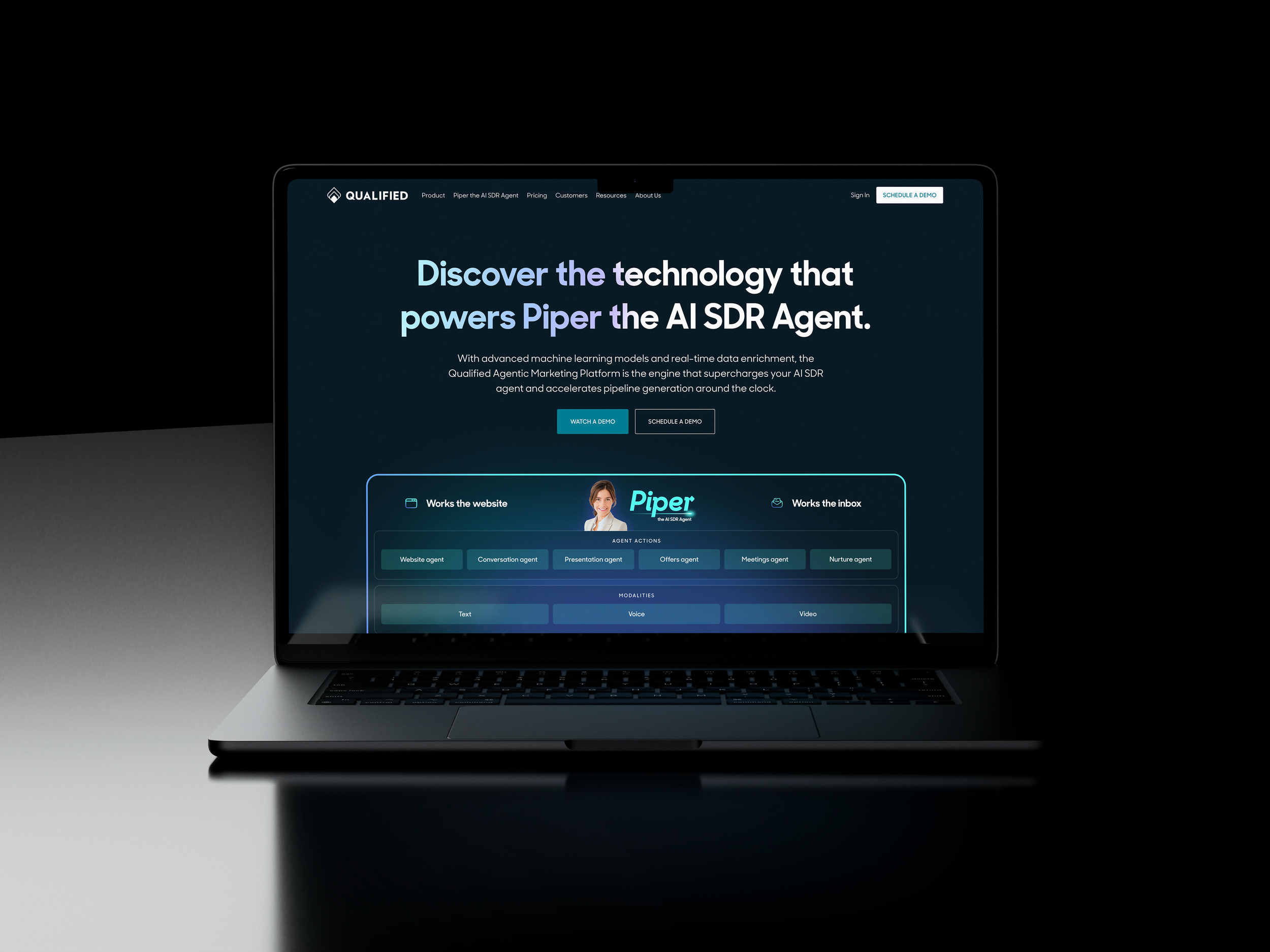
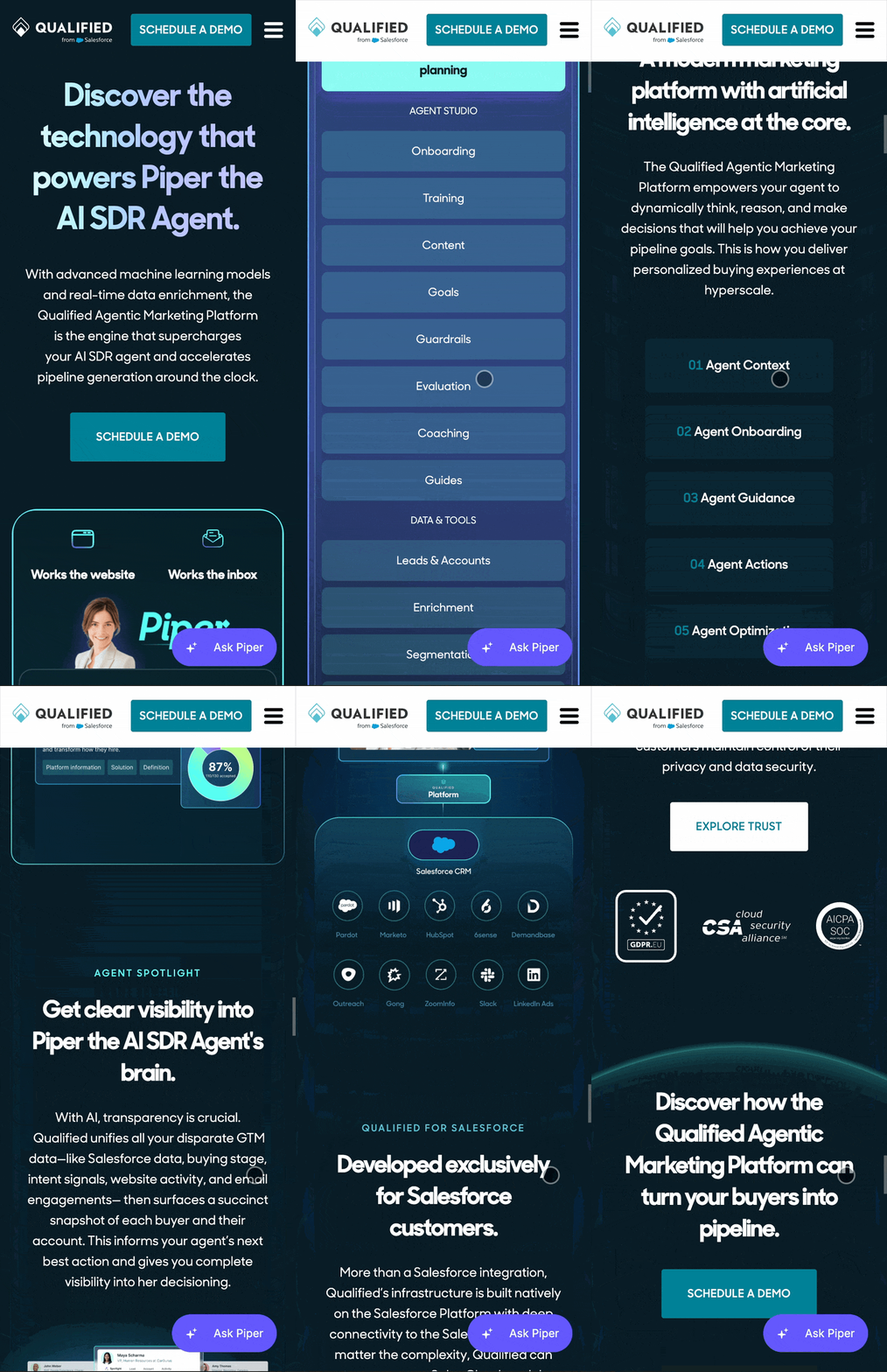
The visual system was designed to support the complexity of the platform while keeping the experience structured, understandable, and enterprise-ready.
A darker visual language helped create more depth, hierarchy, and separation across dense workflows and interconnected systems. The interface relied on restrained color usage, layered contrast, and motion cues to reinforce navigation, system relationships, and interaction clarity without overwhelming the experience.
🌟 Outcome
Overall, the project helped evolve Qualified platform experience into a more cohesive and understandable AI narrative.
By simplifying complex workflows and system behaviors, the updated platform experience made it easier for enterprise users to understand how Piper works, how different parts of the system connect, and how the platform supports the broader GTM workflow.